Salary & Compensation
Hearing Aid Specialist Salary and Job Outlook
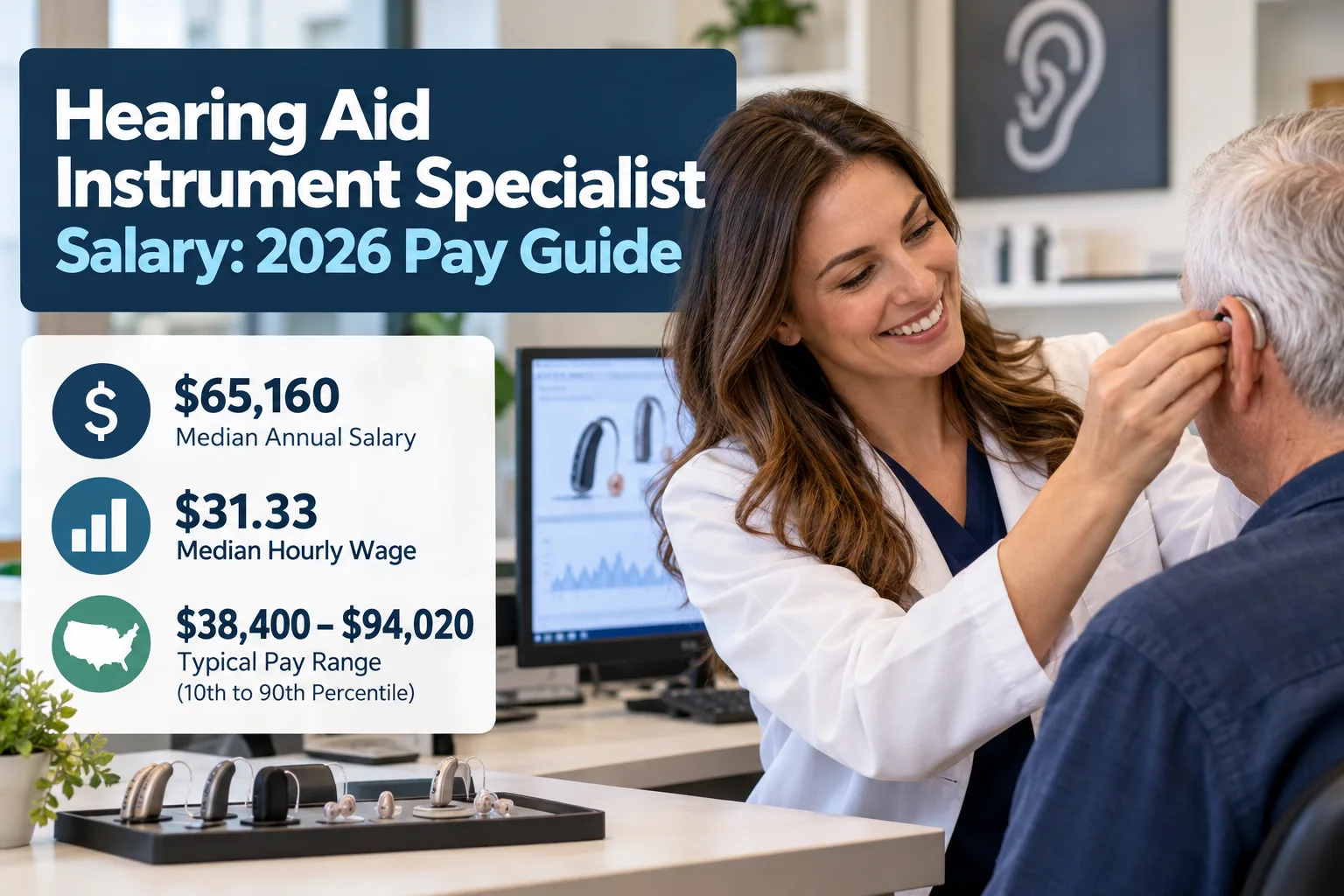
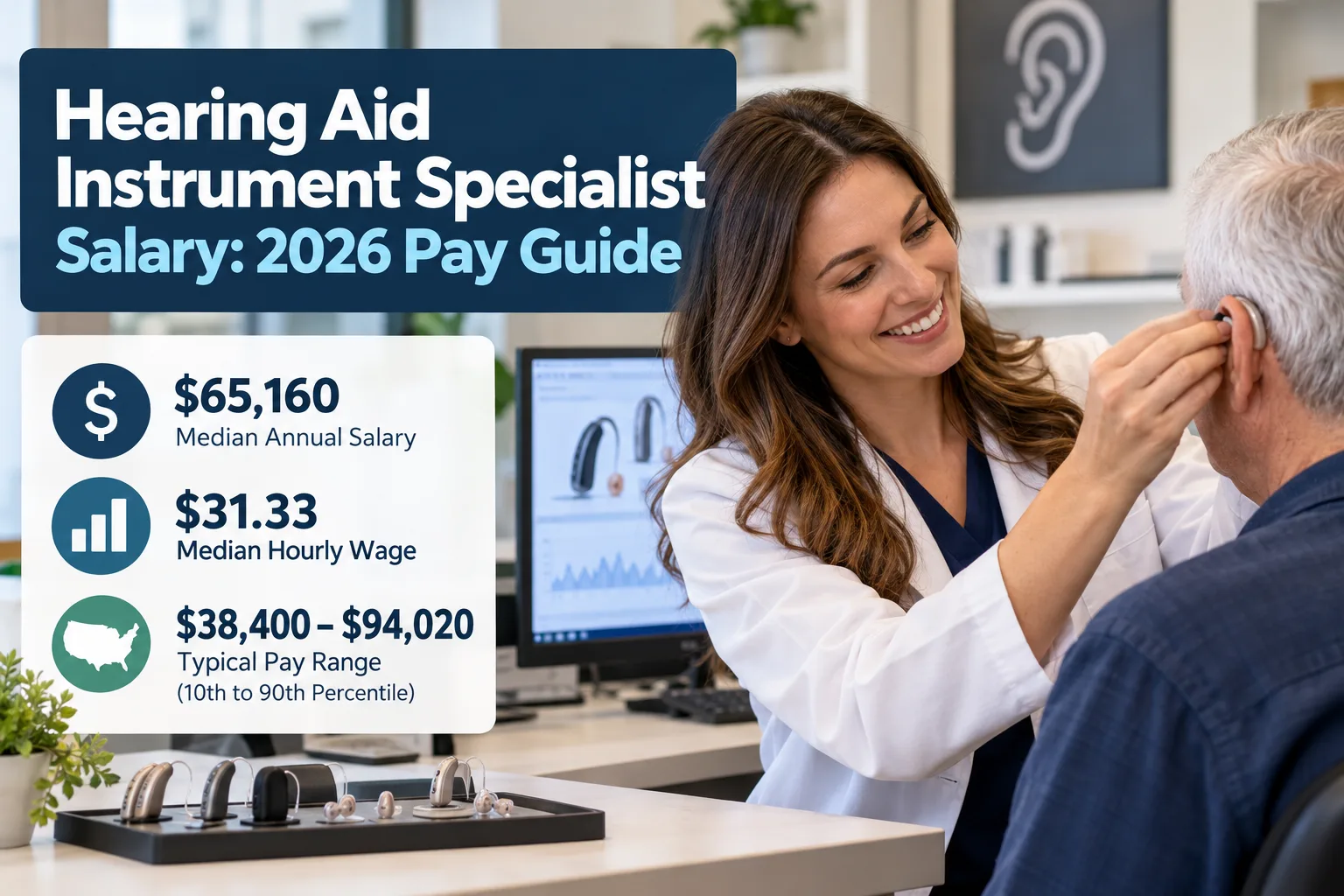
Federal wage data show the median annual wage for Hearing Aid Specialists was $65,160, with projected employment growth of 19% from 2025 to 2035. Demand is expected to rise as the population ages.
Hearing Aid Specialist Salary in 2026: Pay and Job Outlook
The latest federal wage data provide a useful benchmark for people considering a career as a Hearing Aid Specialist or comparing employment opportunities.
According to the U.S. Bureau of Labor Statistics, the median annual wage for Hearing Aid Specialists was $65,160 in May 2025, equivalent to about $31.33 per hour. Bureau of Labor Statistics
That figure represents the median: half of workers earned more and half earned less.
Hearing Aid Specialist salary at a glance
Career measure | Latest federal data |
|---|---|
Median annual wage | $65,160 |
Median hourly wage | $31.33 |
Employment in 2025 | 11,200 |
Projected employment in 2035 | 13,400 |
Projected growth | 19% |
Approx. annual openings | 900 |
Source: U.S. Bureau of Labor Statistics. Bureau of Labor Statistics
Are Hearing Aid Specialist jobs growing?
Yes, according to current BLS projections.
Employment is projected to increase approximately 19% between 2025 and 2035, compared with projected growth of about 3.5% across all U.S. occupations. Bureau of Labor Statistics
BLS places Hearing Aid Specialists among the faster-growing U.S. occupations in its current projection tables. Bureau of Labor Statistics
Why is demand expected to grow?
BLS specifically identifies population aging as a factor expected to increase demand for hearing aids, which in turn can increase demand for specialists who dispense them. Bureau of Labor Statistics
That is a labor-market projection, not a guarantee that every geographic market or employer will experience the same growth.
What industries employ Hearing Aid Specialists?
O*NET's current workforce data, sourced from BLS, identify retail trade and healthcare and social assistance as the two dominant industry groups for Hearing Aid Specialists. O*NET OnLine
Hearing-care employers can include national hearing-center networks, independent practices, medical practices and retailers offering hearing services.
What affects Hearing Aid Specialist compensation?
Actual advertised compensation may differ significantly from the national median.
Factors can include:
state and metropolitan area
years of experience
state license
compensation structure
commissions or incentives
employer type
management responsibilities
travel requirements
For that reason, candidates should compare the compensation disclosed in individual job listings rather than assuming the national median applies to every position.
Hearing Aid Specialist vs Audiologist salary
These are different occupations with different educational and licensing requirements.
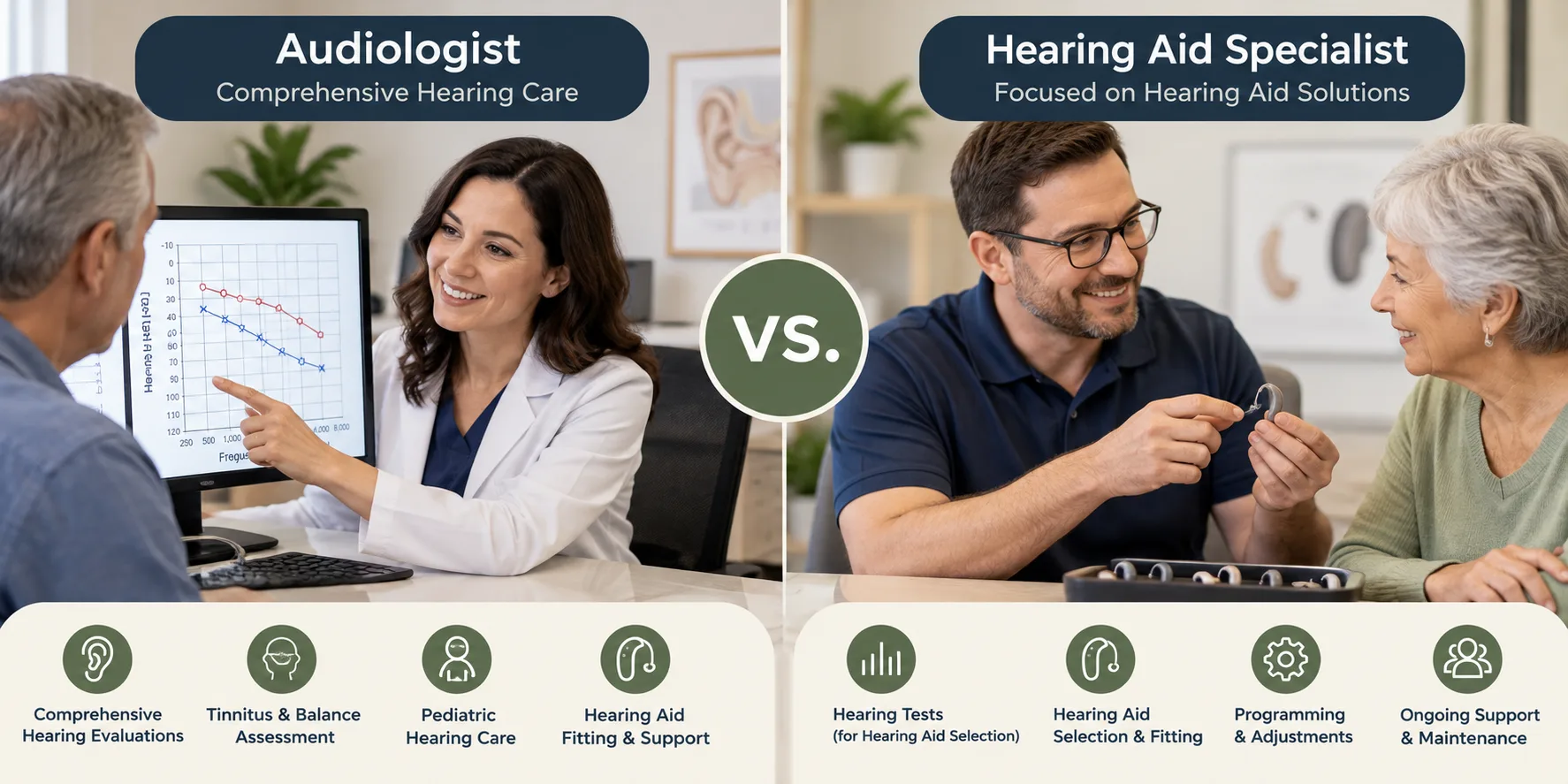
BLS reports a 2025 median annual wage of $95,780 for audiologists, compared with $65,160 for Hearing Aid Specialists. Audiologists typically need a Doctor of Audiology degree, while BLS lists a high school diploma or equivalent as the typical entry-level education category for Hearing Aid Specialists nationally. Bureau of Labor Statistics
The state-level licensing requirements for Hearing Aid Specialists may require additional training and examinations beyond that federal education classification.
Current Hearing Aid Specialist jobs
National salary statistics are useful benchmarks, but current job advertisements provide the clearest picture of what specific employers are offering today.
Browse current Hearing Aid Specialist opportunities →
Sources
U.S. Bureau of Labor Statistics — Hearing Aid Specialists
BLS — Occupational Projections 2025–2035
O*NET — Hearing Aid Specialists
BLS — Audiologists