Career Advice
Hearing Aid Specialist vs Hearing Instrument Specialist vs Audiologist
Hearing Aid Specialist and Hearing Instrument Specialist are closely related titles, but audiology is a separate licensed profession. Job seekers should search multiple related titles and check state licensing rules.
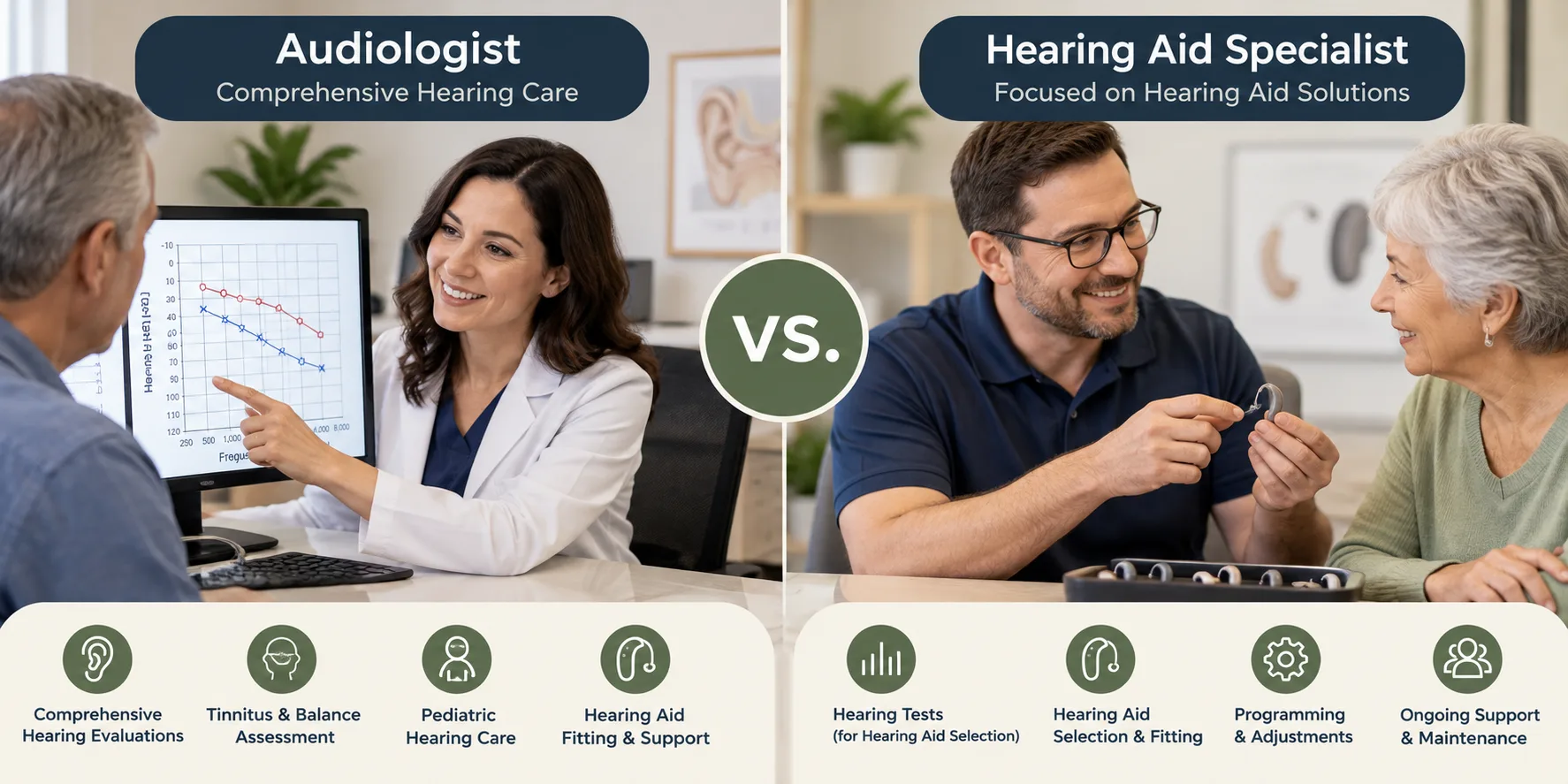
Hearing Aid Specialist vs Hearing Instrument Specialist vs Audiologist
The titles Hearing Aid Specialist, Hearing Instrument Specialist, Hearing Aid Dispenser and Audiologist often appear in the same employment searches, but they do not always mean the same thing.
The biggest distinction is between the hearing-aid-specialist occupational family and audiology.
Are Hearing Aid Specialist and Hearing Instrument Specialist the same career?
They are often closely related titles.
O*NET classifies several job titles under Hearing Aid Specialists, SOC 29-2092, including:
Hearing Aid Specialist
Hearing Instrument Specialist
Hearing Instrument Dispenser
Hearing Care Specialist
Licensed Hearing Instrument Specialist O*NET OnLine
However, the official title and permitted scope of practice are determined by each state's laws and licensing system.
Someone searching for jobs should therefore search multiple related titles rather than only one.
What is an Audiologist?
Audiology is a separate licensed profession.
BLS states that audiologists typically need a Doctor of Audiology (Au.D.) degree to enter the occupation and that all states require audiologists to be licensed. Bureau of Labor Statistics
The American Academy of Audiology describes audiologists as professionals who evaluate, diagnose, treat and manage hearing and balance disorders and who work in settings including hospitals, private practices, ENT offices, universities, schools, government and VA facilities. American Academy of Audiology
Career comparison
Hearing Aid Specialist / HIS | Audiologist | |
|---|---|---|
Federal occupation | 29-2092 | 29-1181 |
Typical BLS entry education | High school diploma/equivalent* | Doctoral/professional degree |
Training | Moderate-term OJT nationally* | Doctor of Audiology education |
License | State/jurisdiction dependent | Required in all states |
2025 median wage | $65,160 | $95,780 |
2025–35 growth | 19% | 11% |
Main job focus | Hearing instruments and related services within licensed scope | Broader hearing and balance evaluation/management |
*State licensing requirements for Hearing Aid Specialists may impose additional education, supervised training and examinations beyond BLS's national occupational classification. Bureau of Labor Statistics
Education and training differences
For Hearing Aid Specialists, IHS identifies two primary pathways:
workplace/on-the-job training
an academic program in hearing instrument sciences
IHS says most individuals enter through on-the-job training and recommends checking the licensing requirements in the jurisdiction where the candidate plans to practice. IHS
Audiologists follow a substantially longer academic pathway. BLS says a Doctor of Audiology degree is typically required for entry. Bureau of Labor Statistics
Salary comparison
According to current BLS data:
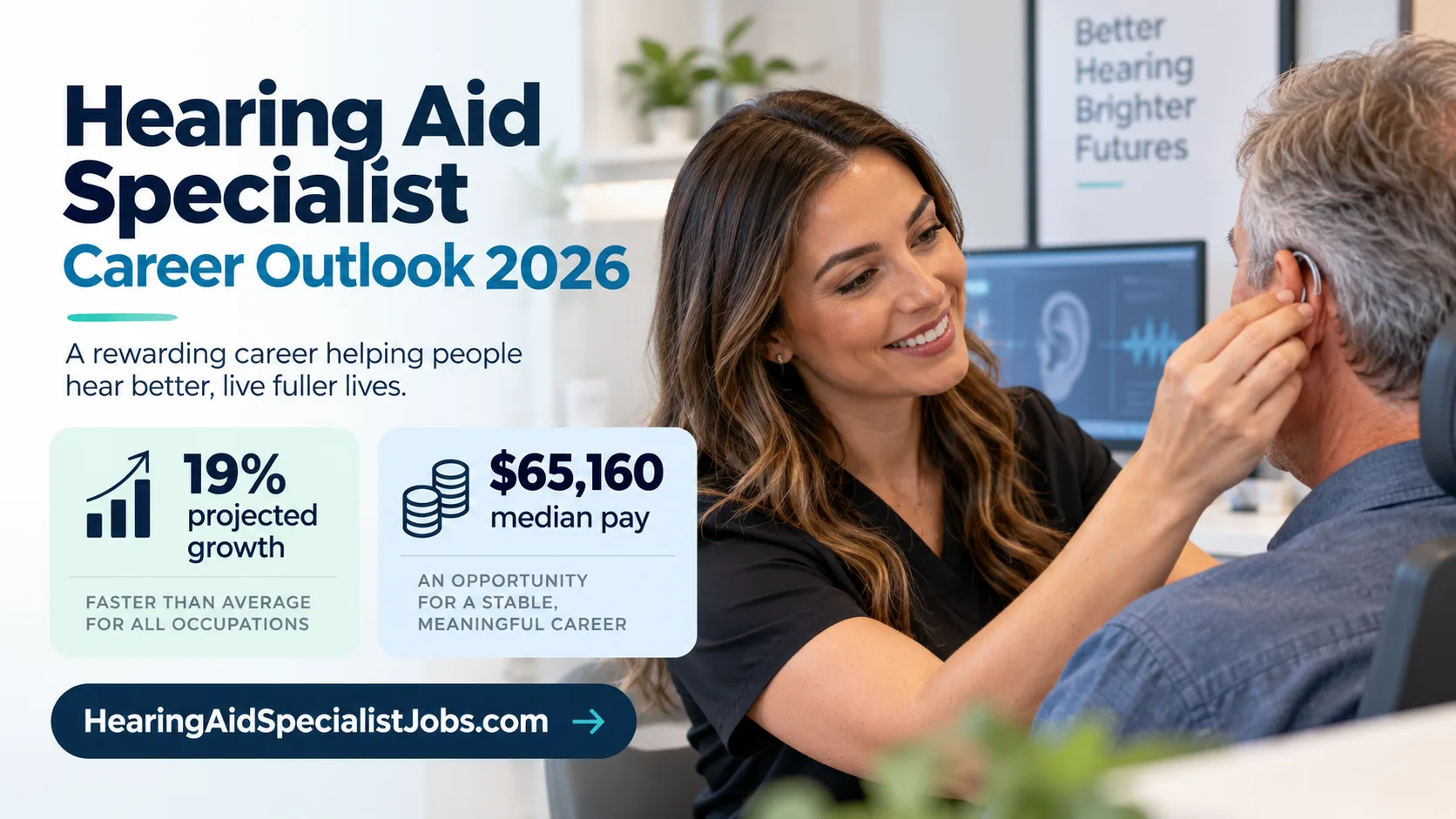
Hearing Aid Specialist median wage: $65,160
Audiologist median wage: $95,780
Both figures are May 2025 national medians. Bureau of Labor Statistics
These are national figures and should not be interpreted as expected salaries for any individual job.
Job outlook comparison
BLS projects Hearing Aid Specialist employment to grow approximately 19% from 2025 to 2035. Bureau of Labor Statistics
Audiologist employment is projected to grow approximately 11% over the same period, with about 600 openings annually on average. Bureau of Labor Statistics
Both projections exceed the projected overall U.S. occupational growth rate.
Which titles should job seekers search?
Candidates interested in hearing-aid dispensing roles should consider searches for:
Hearing Aid Specialist
Hearing Instrument Specialist
Hearing Aid Dispenser
Hearing Instrument Dispenser
Licensed Hearing Instrument Specialist
Hearing Care Provider
O*NET confirms that several of these are commonly reported job titles for occupation 29-2092. O*NET OnLine
Your licensing eligibility for a particular job depends on the requirements of the state and employer.
Browse jobs by career
Hearing Instrument Specialist Jobs →
Sources
O*NET — Hearing Aid Specialists
International Hearing Society — Becoming a Hearing Aid Specialist
U.S. Bureau of Labor Statistics — Hearing Aid Specialists
U.S. Bureau of Labor Statistics — Audiologists
American Academy of Audiology — Audiologists vs Hearing Instrument Specialists