Career Advice
Is Becoming a Hearing Aid Specialist Worth It in 2026?
Hearing aid specialists help test, fit and support hearing aids, and the career can be entered without a four-year degree. The field also shows strong pay and job growth.
Is Becoming a Hearing Aid Specialist Worth It in 2026? Salary, Job Growth and Career Path
If you are considering a career change into healthcare but do not want to spend four or more years earning another degree, becoming a hearing aid specialist may be worth a closer look.
Hearing aid specialists, also called hearing instrument specialists or hearing aid dispensers in some states, work directly with people who need help hearing. They perform hearing tests for the purpose of selecting and fitting hearing aids, help patients choose appropriate devices, program and adjust hearing aids, take ear impressions, and provide ongoing support.
And the career outlook is unusually strong.
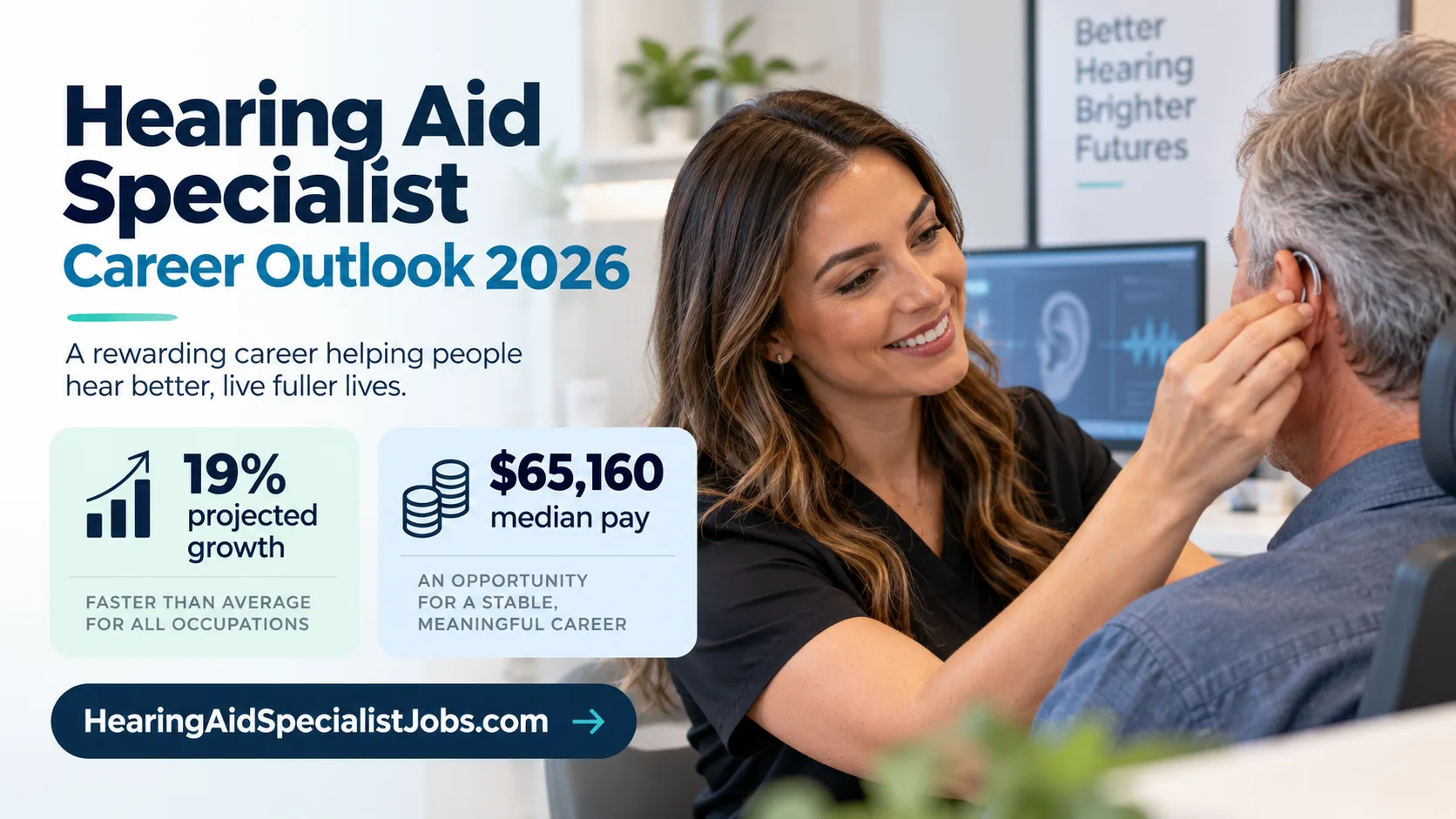
According to the U.S. Bureau of Labor Statistics, the median annual wage for hearing aid specialists was $65,160 in May 2025. Employment is projected to grow 19% from 2025 through 2035, adding about 2,200 jobs nationwide. BLS classifies that growth as much faster than the average for all occupations.
## Why Hearing Aid Specialist Jobs Are Growing
The United States has an aging population, and demand for hearing healthcare is expected to continue growing along with it.
Hearing aid technology has also changed significantly. Modern devices are smaller, more sophisticated and increasingly connected to smartphones and other technology. For hearing aid specialists, the job is no longer simply about selling a device. It increasingly combines healthcare, technology, customer service and long-term patient relationships.
The numbers reflect that demand. Hearing aid specialists are currently among the faster-growing occupations tracked by the Bureau of Labor Statistics.
## How Much Do Hearing Aid Specialists Make?
The national median annual wage for hearing aid specialists was $65,160 in May 2025, according to BLS data.
Actual compensation can vary significantly based on:
- State and local market
- Experience
- Employer
- Commission or bonus structure
- Sales performance
- Licensure
- Clinic volume
- Management responsibilities
Some hearing aid specialist positions include a base salary plus commission or performance bonuses, which means total compensation may be higher than the stated base salary.
When comparing hearing aid specialist jobs, look beyond the advertised salary. Ask whether the compensation listed includes commissions, whether leads are provided, how bonuses are calculated and whether benefits such as health insurance, retirement contributions, paid time off or continuing education are included.
## Do You Need a College Degree?
One of the biggest advantages of this career is that a four-year degree is generally not the standard entry requirement.
The Bureau of Labor Statistics lists a high school diploma or equivalent as the typical entry-level education and moderate-term on-the-job training as the typical training path. BLS has also highlighted hearing aid specialist as a healthcare career that can be entered without a four-year degree.
The International Hearing Society says there are two common pathways into the profession:
1. On-the-job training under an experienced professional.
2. An academic program in hearing instrument sciences.
IHS notes that most people enter the field through on-the-job training.
That makes trainee hearing aid specialist jobs especially important for people trying to enter the profession.
## Do Hearing Aid Specialists Need a License?
Hearing aid dispensing is regulated, and requirements vary by state.
Depending on where you live, you may need a trainee or apprentice permit, supervised work experience, an examination, a practical test, continuing education or another state-specific credential.
The International Hearing Society advises prospective specialists to contact their state licensing agency before beginning training because requirements differ by jurisdiction. IHS also maintains a directory of licensing agencies across the United States.
The International Licensing Examination for Hearing Healthcare Professionals is used as a written licensing examination by many U.S. states and Canadian provinces, although candidates should always confirm the exact process with their own licensing authority.
The profession may also be listed under different names depending on the state. Common titles include:
- Hearing Aid Specialist
- Hearing Instrument Specialist
- Hearing Aid Dispenser
- Hearing Aid Fitter
- Hearing Aid Dealer
ASHA notes that states may use different titles for non-audiologist professionals licensed to dispense hearing aids.
## What Does a Hearing Aid Specialist Actually Do?
A typical hearing aid specialist may:
- Discuss a patient's hearing concerns and listening needs
- Conduct hearing tests within the permitted scope of practice
- Explain test results
- Recommend appropriate hearing instruments
- Fit and program hearing aids
- Make adjustments based on patient feedback
- Take ear impressions when needed
- Teach patients how to use and care for their devices
- Troubleshoot hearing aid problems
- Provide follow-up care
- Maintain patient records
- Recognize situations that require referral to another healthcare professional
Successful specialists need both technical ability and people skills.
A patient may be frustrated, nervous or reluctant to wear hearing aids. Being able to explain technology clearly, listen carefully and build trust can be just as important as understanding the devices themselves.
## Is This a Sales Job?
Sometimes, but that description alone does not tell the full story.
Many hearing aid specialist positions include a sales component because the specialist helps patients choose and purchase hearing devices. Some employers also use commission-based compensation.
However, the role also involves testing, fitting, programming, counseling, troubleshooting and continuing patient care.
People coming from sales, retail, customer service, healthcare or other relationship-driven careers may find that many of their existing skills transfer well.
If you enjoy helping people, explaining technology and building relationships while also being comfortable discussing products and pricing, the profession can be a particularly good fit.
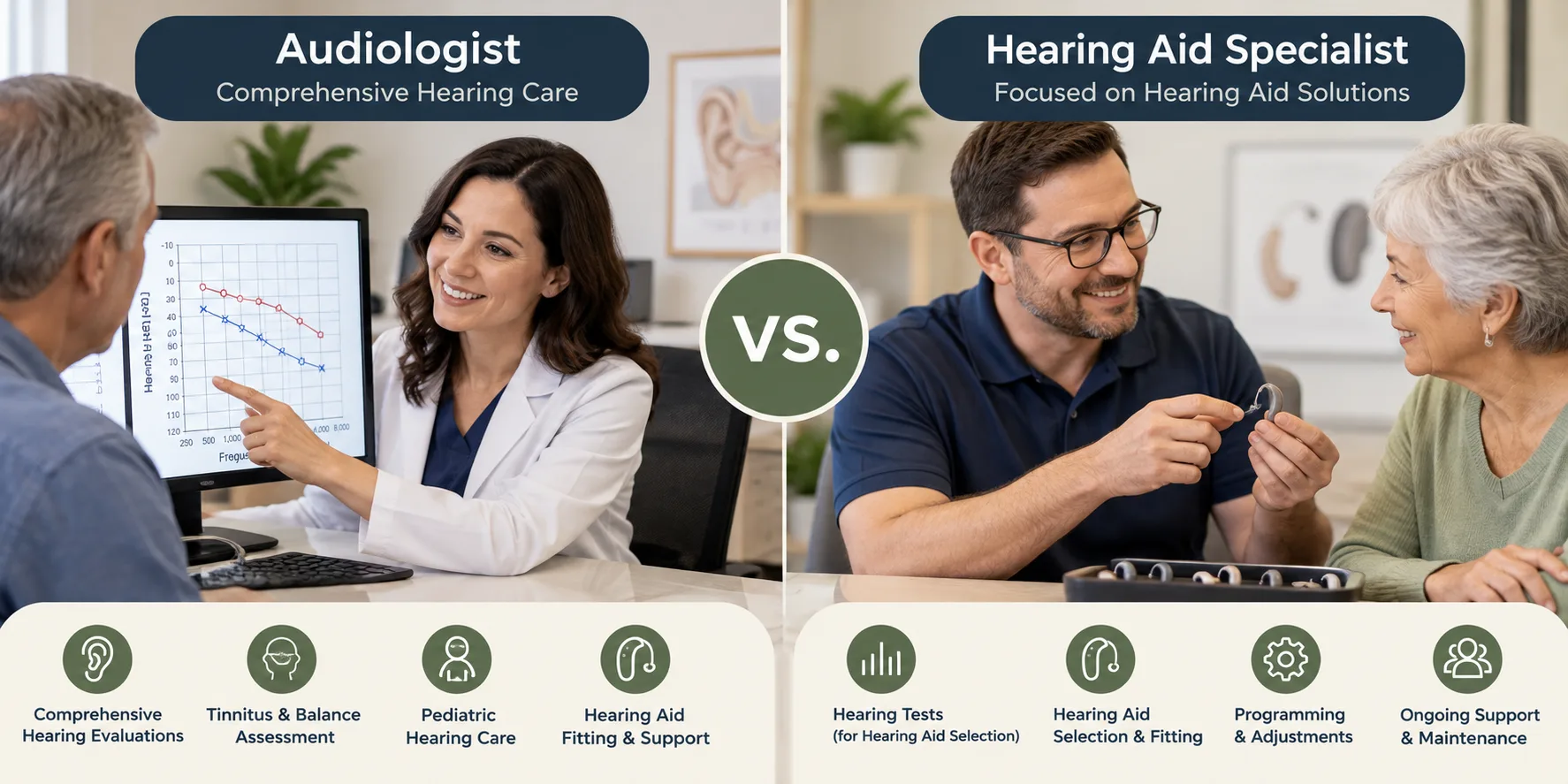
## Hearing Aid Specialist vs. Audiologist
These are different professions.
Audiologists typically need a Doctor of Audiology degree and must meet state licensing requirements. The median annual wage for audiologists was $95,780 in May 2025, and BLS projects audiologist employment to grow 11% from 2025 to 2035.
Hearing aid specialists generally have a shorter entry path and focus primarily on hearing testing related to hearing aid dispensing, device selection, fitting and follow-up care within their state-authorized scope of practice.
For someone looking to enter hearing healthcare without completing a doctoral program, hearing aid specialist can provide a much faster path into the field.
## Is Becoming a Hearing Aid Specialist Worth It?
For the right person, there is a strong case for it.
The profession currently combines several attractive characteristics:
- No four-year degree is typically required for entry
- Median national pay above $65,000
- 19% projected employment growth
- Healthcare industry exposure
- Technology-focused work
- Direct interaction with patients
- Opportunities for commission or bonuses at some employers
- A pathway for career changers
It will not be the right career for everyone. Licensing takes effort, the work is customer-facing, and some positions place significant emphasis on sales performance.
But for someone who enjoys working with people and technology and wants a healthcare career without spending years in graduate school, it is one of the more interesting occupations to investigate in 2026.
## Ready to See Who Is Hiring?
Before committing to a new career, one of the best things you can do is look at real job postings.
See which employers are hiring, what qualifications they require, what compensation they advertise and whether trainee positions are available in your area.
Browse current hearing aid specialist jobs across the United States at HearingAidSpecialistJobs.com.
You can also search related titles such as hearing instrument specialist jobs and hearing aid dispenser jobs, since employers and states often use different titles for similar positions.
---
Sources: U.S. Bureau of Labor Statistics; International Hearing Society; American Speech-Language-Hearing Association. Licensing requirements change and should always be confirmed with the appropriate state licensing agency.