Hearing Aid Specialist
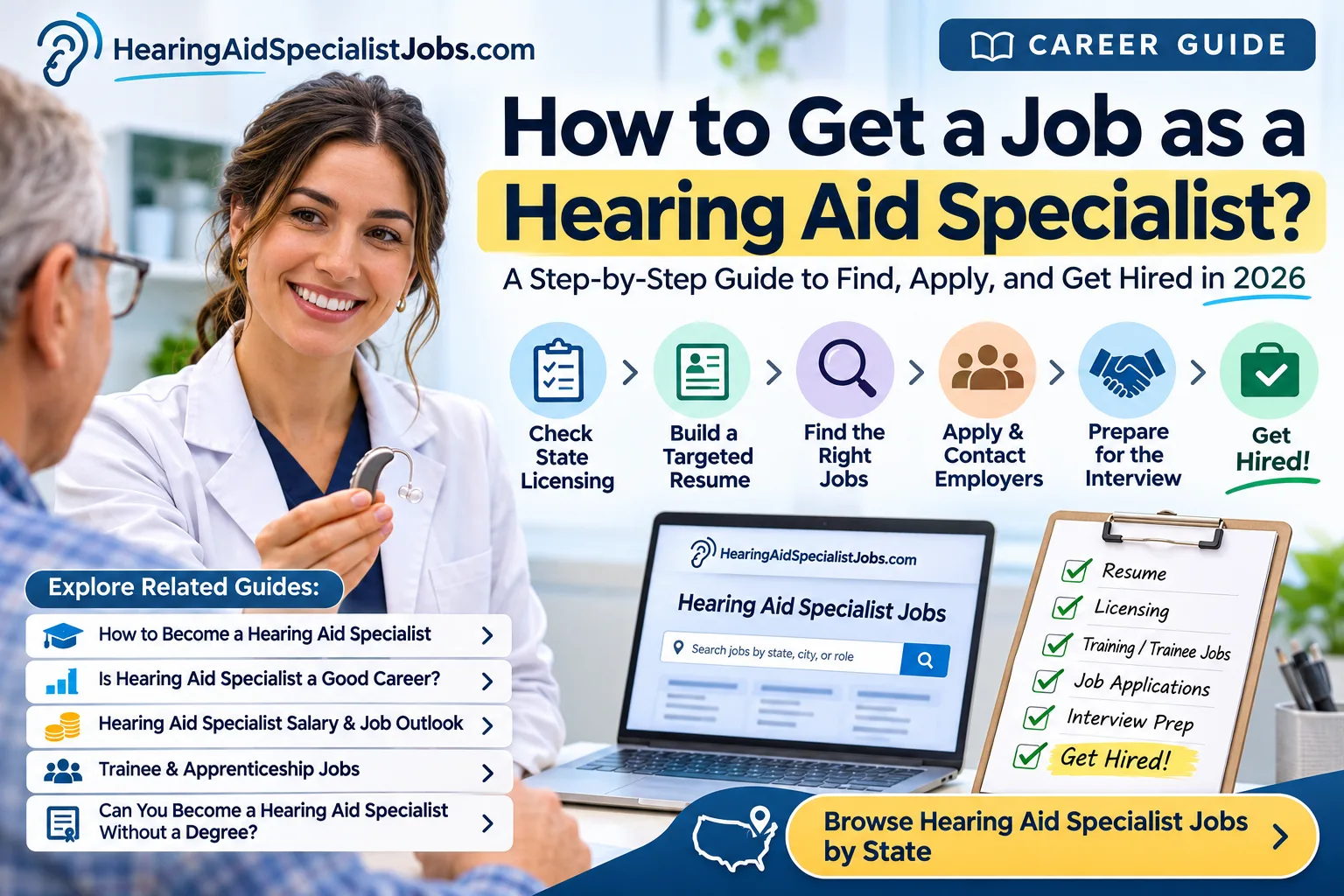
How to Get a Job as a Hearing Aid Specialist
Learn how to get a job as a hearing aid specialist in 2026. Find trainee jobs, understand licensing, prepare your resume, and discover hiring employers.
17 min read
Read Guide Career resources for Hearing Aid Specialists, Hearing Instrument Specialists, Hearing Aid Dispensers, Audiologists, and professionals entering the hearing-care field.
Hearing Aid Specialist
Learn how to get a job as a hearing aid specialist in 2026. Find trainee jobs, understand licensing, prepare your resume, and discover hiring employers.

Hearing Aid Specialist
Is hearing aid specialist a good career? Explore 2026 salary, 19% job growth, training, career benefits, downsides, and hearing aid specialist jobs near you.
Salary & Compensation
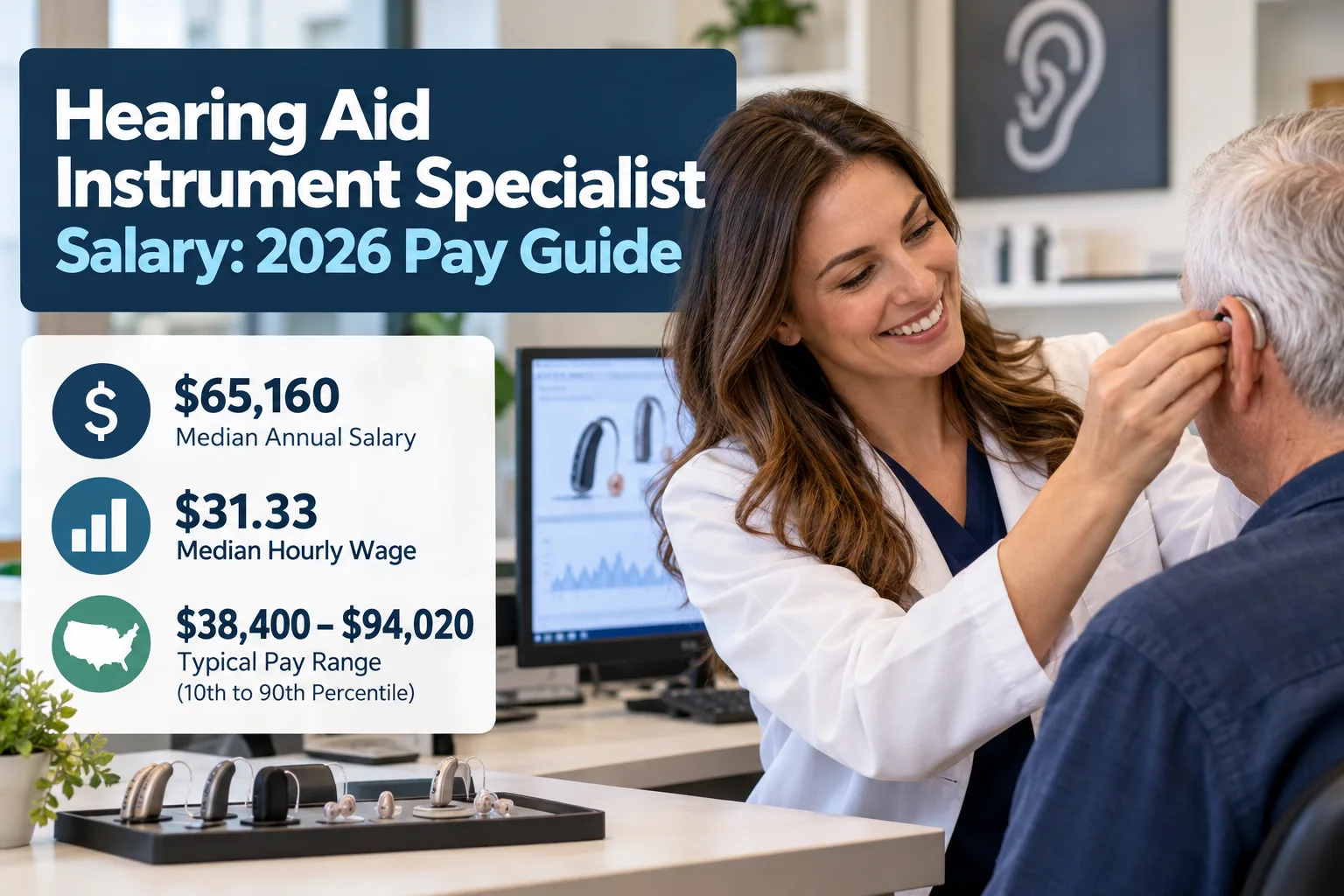
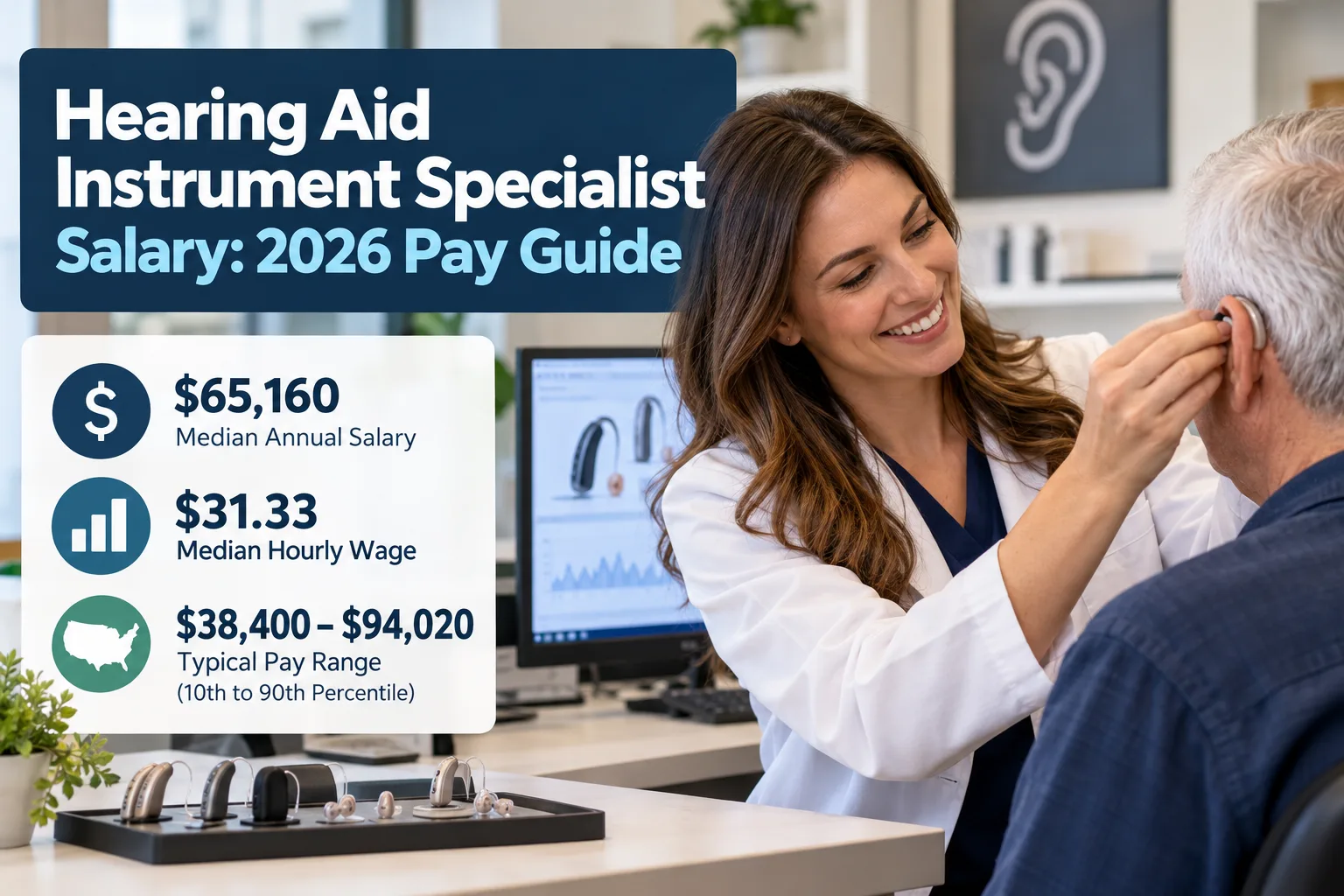
Hearing Aid Instrument Specialist Salary: 2026 Pay Guide . Hearing Instrument Specialist pay is benchmarked by BLS data, with a national median of $65,160 per year and $31.33 per hour. Earnings vary by location, experience, licensing, and commission structure.
Salary & Compensation
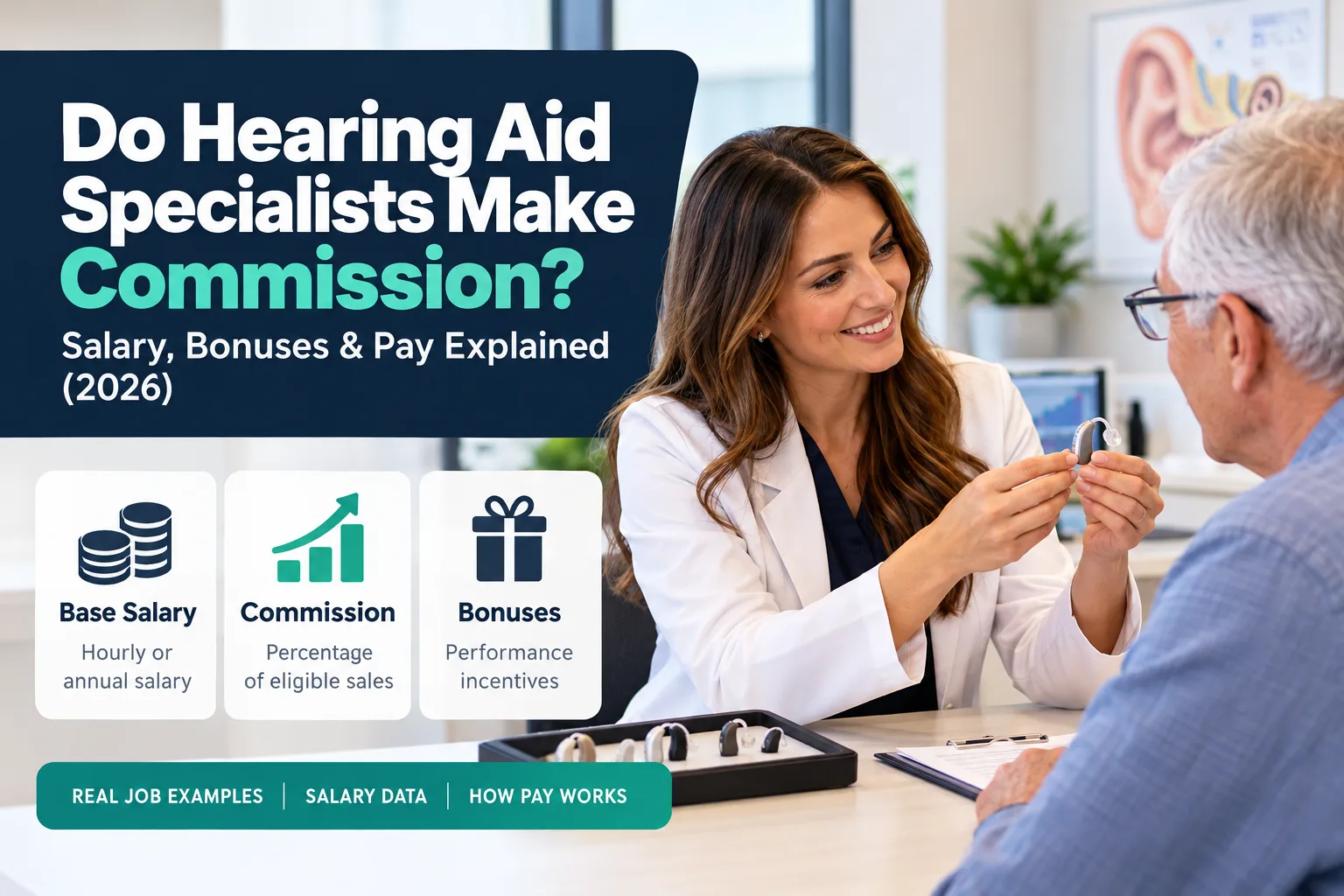
Hearing aid specialist pay can include salary, hourly wages, commissions, or bonuses, depending on the employer. Earnings vary by location, compensation plan, and whether sales incentives are included.
Career Advice
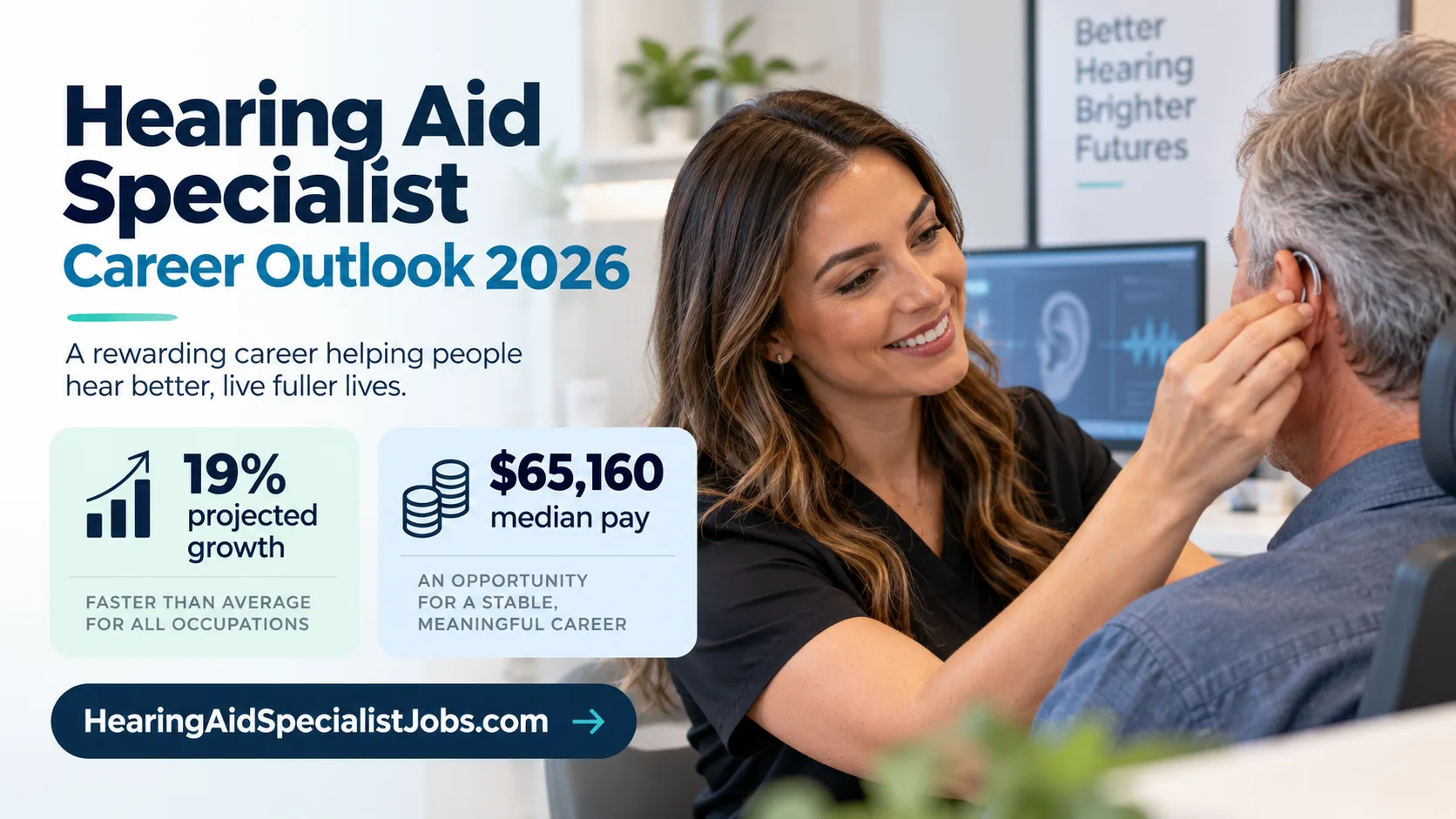
Hearing aid specialists help test, fit and support hearing aids, and the career can be entered without a four-year degree. The field also shows strong pay and job growth.

Training & Education
A college degree is not universally required to become a Hearing Aid Specialist in the United States. National guidance points to a high school diploma or equivalent, plus state-specific licensure rules.

Training & Education
There is no single national timeline for becoming a Hearing Instrument Specialist. Preparation may involve workplace training, academic education, licensing exams, and a jurisdiction-specific application process.
Salary & Compensation
National BLS data puts the median hourly wage for Hearing Aid Specialists at $31.33, with a median annual wage of $65,160. Pay can vary by location, experience, licensing status, employer, and compensation structure.
Career Advice
Hearing Aid Specialist work combines client care, technology and healthcare-related tasks, with projected job growth and accessible entry paths. State licensing rules and client-facing duties are important considerations.
Training & Education
Hearing Aid Specialist apprenticeships are typically work-based paths with supervised training. Job seekers should search multiple trainee titles and verify state licensing rules before applying.
Salary & Compensation
Federal wage data show the median annual wage for Hearing Aid Specialists was $65,160, with projected employment growth of 19% from 2025 to 2035. Demand is expected to rise as the population ages.
Career Advice
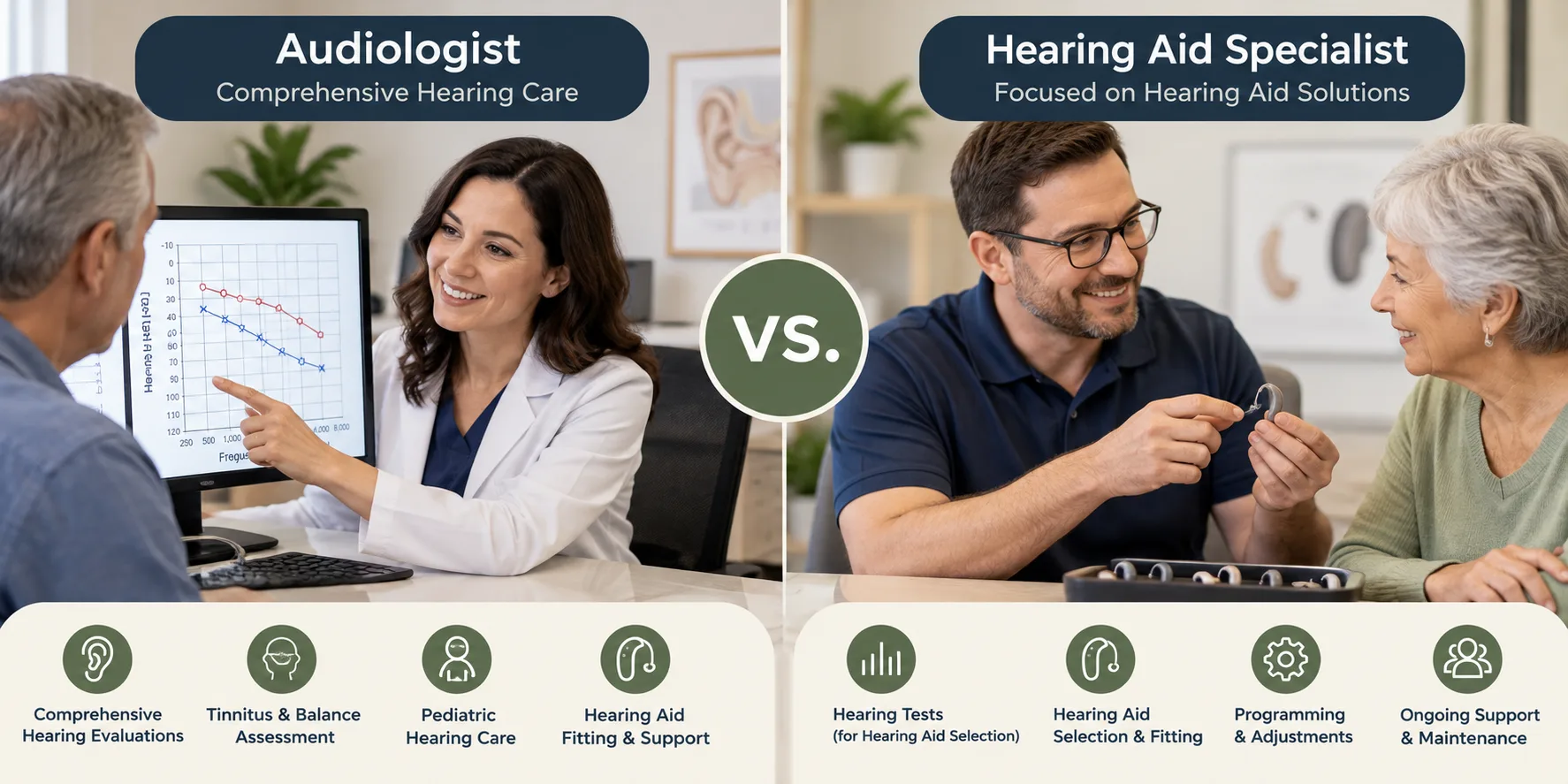
Hearing Aid Specialist and Hearing Instrument Specialist are closely related titles, but audiology is a separate licensed profession. Job seekers should search multiple related titles and check state licensing rules.
Hearing Aid Specialist
Learn how to become a Hearing Aid Specialist, including training pathways, state licensing, exams, education requirements, salary and current job opportunities.
Licensing
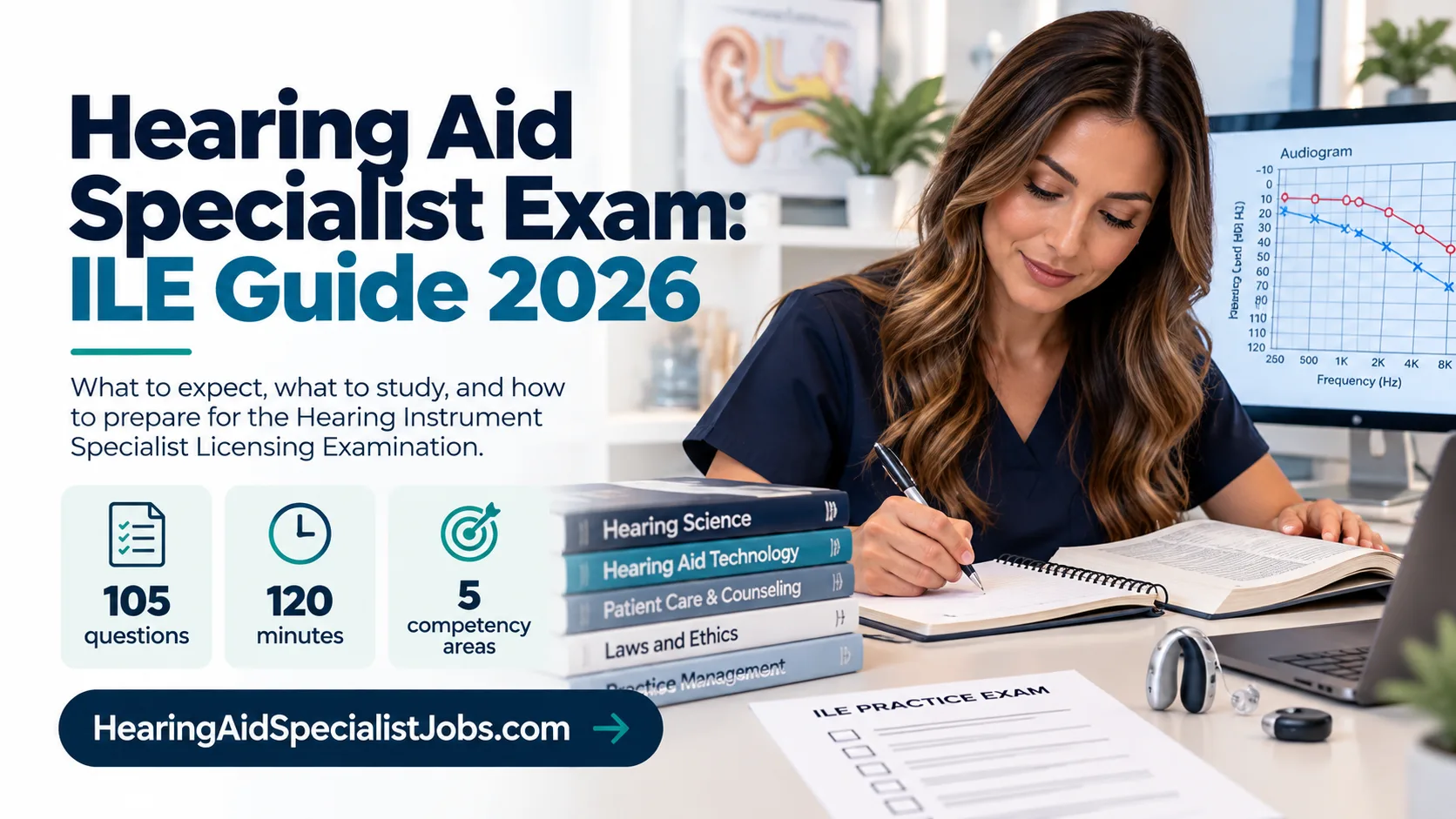
Learn how the ILE works for Hearing Aid Specialist licensure, including the exam format, topic areas, scoring method, and the difference between course scores and licensing results.
Career Advice
A Hearing Aid Specialist fits and services hearing aids, conducts hearing tests, teaches clients how to use devices, and works closely with the public in client-facing settings.
Training & Education
There is no single nationwide timeline for becoming a Hearing Aid Specialist. The path depends on state licensing rules, training route, required examinations, and whether you train on the job.
Training & Education
A four-year degree is not universally required to become a Hearing Aid Specialist. State licensing rules, supervised training, and examinations can still determine the pathway.