Salary & Compensation
Hearing Aid Specialist Commission & Salary (2026)
Hearing aid specialist pay can include salary, hourly wages, commissions, or bonuses, depending on the employer. Earnings vary by location, compensation plan, and whether sales incentives are included.
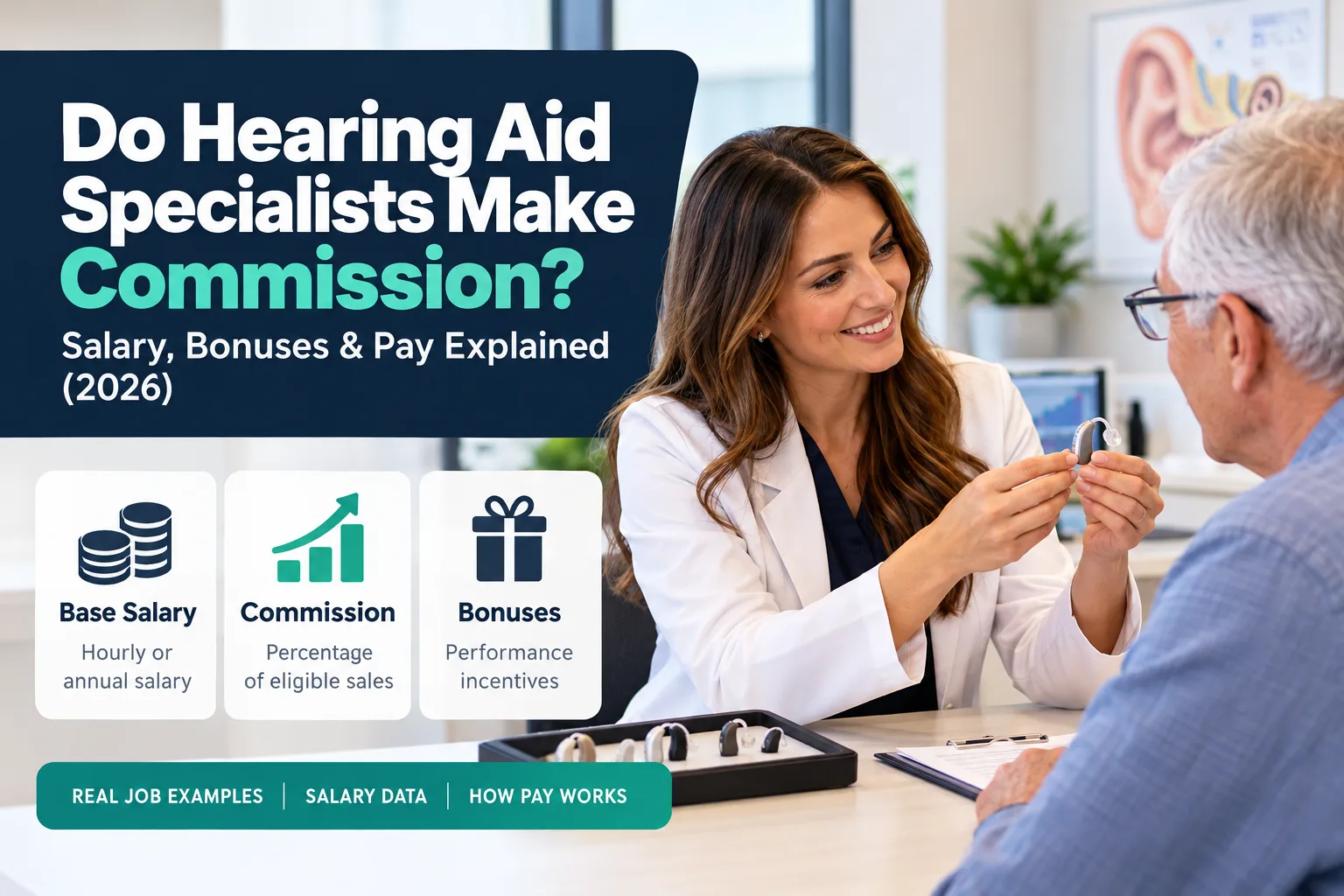
Do Hearing Aid Specialists Make Commission? Salary, Bonuses & Pay Explained (2026)
If you're considering a career as a Hearing Aid Specialist, you probably have an important question: Will I earn a regular salary, or will my income depend on selling hearing aids?
The answer depends on your employer.
Some hearing aid specialists receive a fixed salary or hourly wage. Others earn a base salary plus commission, performance bonuses, or other incentives. Your experience, location, qualifications, and employer's compensation structure can all affect your overall earnings.
Here's what to know before accepting a hearing aid specialist job.
Do Hearing Aid Specialists Earn Commission?
Yes. Some hearing aid specialists earn sales commissions in addition to their base pay. However, not every employer uses a commission-based compensation model.
For example, HearingLife, a national hearing healthcare provider, advertises competitive salaries and commission opportunities for hearing instrument specialists.
One HearingLife job listing in Duluth, Minnesota, advertised a base salary of $60,000–$85,000, depending on credentials and license type, plus 6% uncapped commission on sales. The listing also mentioned relocation or signing incentives.
This is an individual job listing, not an industry-wide pay standard.
Source: Demant/HearingLife job posting
What Is the Average Hearing Aid Specialist Salary in 2026?
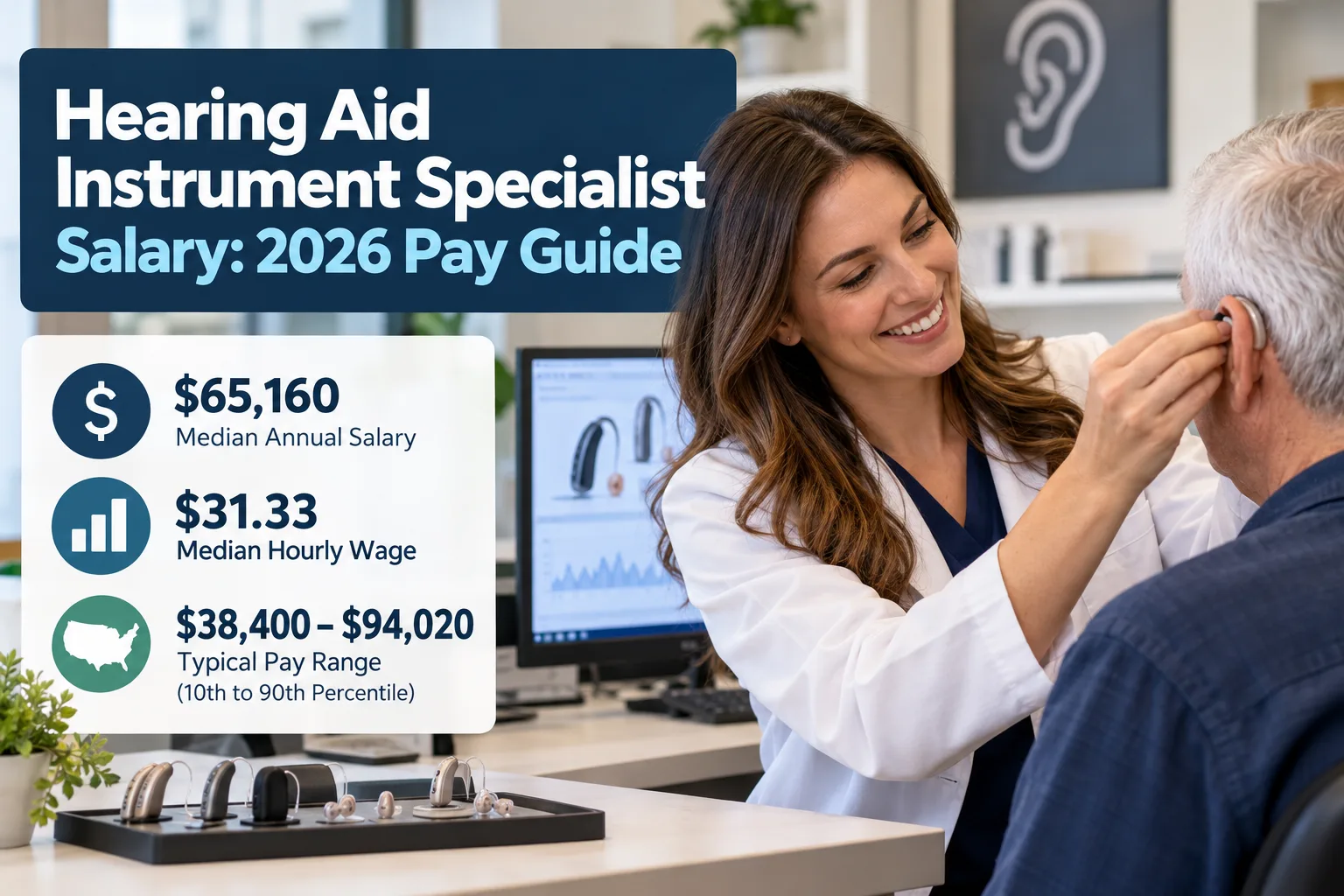
The latest available U.S. Bureau of Labor Statistics wage estimates, covering May 2025, provide a useful national benchmark.
Wage measure | Annual pay |
|---|---|
10th percentile | $38,400 |
25th percentile | $48,390 |
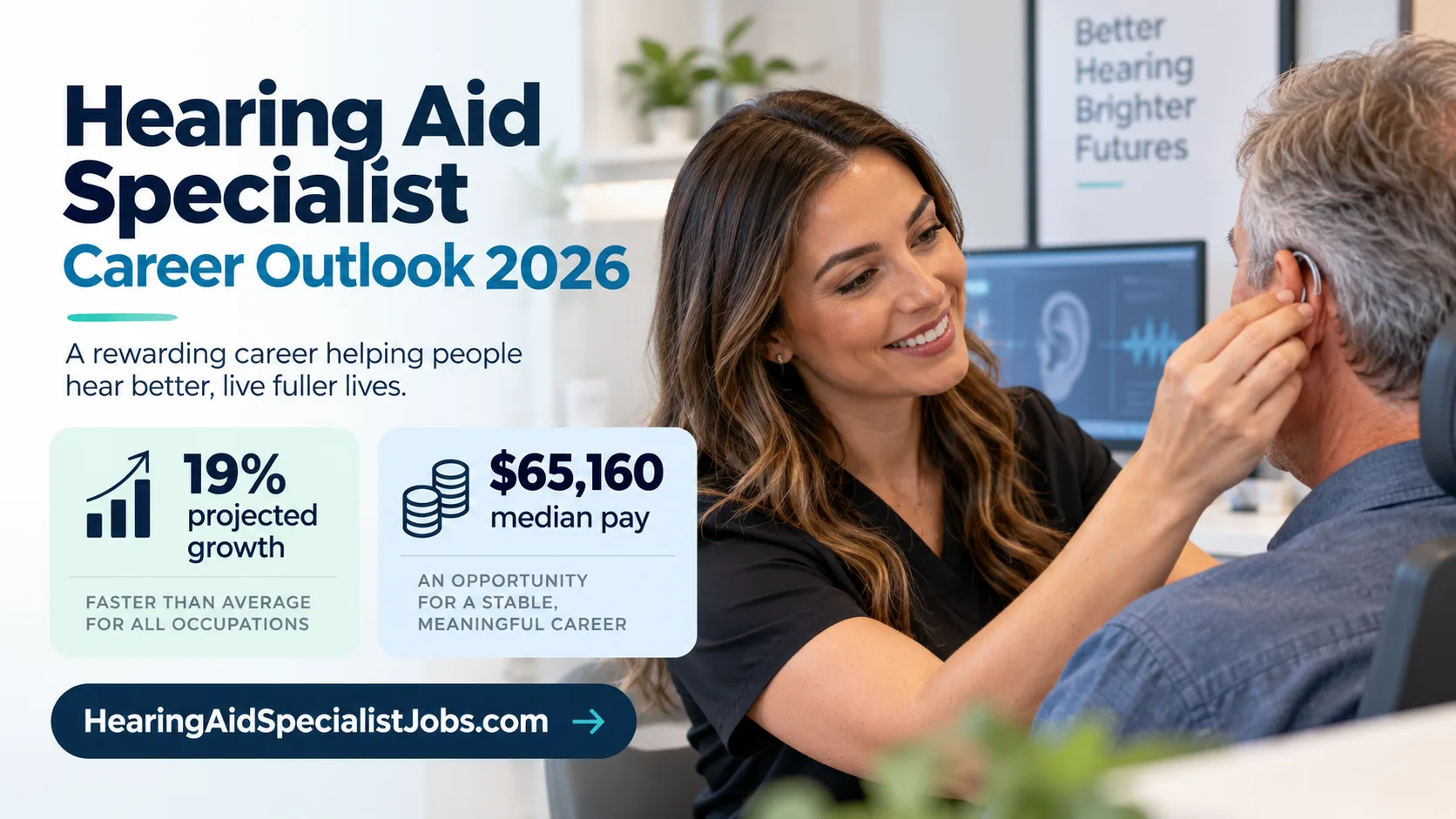
Median | $65,160 |
75th percentile | $80,010 |
90th percentile | $94,020 |
The national median hourly wage was $31.33.
These figures describe occupational wages, not guaranteed offers or base salaries. They should not be interpreted as additional commission on top of the listed amounts.
Actual earnings vary considerably by employer and geographic location.
Source: CareerOneStop Salary Finder, using BLS May 2025 data
How Does Hearing Aid Specialist Commission Work?
A commission arrangement pays an employee an additional amount based on qualifying sales or other activities specified by an employer.
For example, a clinic might offer a fixed salary plus a percentage of eligible hearing aid sales.
Example: Base Salary Plus Commission
Consider a hypothetical job offer with the following terms:
Annual base salary: $55,000
Commission rate: 5%
Eligible monthly sales: $30,000
At that sales level, monthly commission would be $1,500.
If the same sales volume continued for 12 months, the hypothetical annual compensation would be:
Compensation | Amount |
|---|---|
Base salary | $55,000 |
Annual commission | $18,000 |
Total annual compensation | $73,000 |
This is an illustration, not a typical earnings estimate. Actual commissions may depend on returns, cancellations, product eligibility, insurance arrangements, collection of payment, and other plan rules.
Some employers also offer bonuses tied to clinic performance or individual goals.
Are Hearing Aid Specialist Jobs Sales Jobs?
Hearing aid specialist positions combine hearing healthcare services with product consultation and, in many practices, sales responsibilities.
According to the Bureau of Labor Statistics, hearing aid specialists perform tasks such as selecting and fitting hearing aids, administering hearing tests, evaluating device effectiveness, and working with earmolds.
In a typical position, responsibilities may include:
Conducting hearing assessments within the specialist's authorized scope of practice.
Explaining hearing aid features and available options.
Fitting and adjusting hearing instruments.
Troubleshooting and providing follow-up care.
Helping patients understand device costs and payment options.
Supporting clinic operational and financial goals.
The exact balance between patient care and sales depends on the employer.
Do you have to meet sales quotas?
Some clinics establish sales targets or revenue goals. Others may emphasize different measures, including patient care, follow-up services, and overall practice performance.
For example, an official HearingLife posting describes responsibilities involving patient care, growth of the patient population, and practice financial goals.
Before accepting an offer, ask how performance is measured and how compensation is affected when targets are missed.
Importantly, hearing healthcare recommendations should be based on each patient's needs, applicable clinical standards, and professional responsibilities rather than the commission associated with a particular product.
What Are the Different Types of Hearing Aid Specialist Pay?
1. Hourly pay
You receive a set hourly rate based on hours worked.
This provides a predictable hourly rate, although the number of hours scheduled may vary.
2. Fixed salary
You receive a predetermined salary, subject to the employment agreement.
This structure may appeal to people who prefer more predictable income.
3. Base salary plus commission
You receive a fixed base salary alongside additional compensation on eligible sales.
Earnings may increase when sales increase, but the commission portion is variable.
4. Base salary plus performance bonus
Some employers offer periodic bonuses based on defined individual or clinic performance measures.
Unlike a straightforward percentage-of-sales commission, bonuses may be tied to several factors.
5. Commission-focused compensation
Some sales-oriented roles may depend more heavily on variable compensation.
If considering such an arrangement, clarify the guaranteed pay, commission formula, payment timing, and any applicable draw or repayment terms.
Can Hearing Aid Specialists Make $100,000 a Year?
Yes, earning $100,000 or more is possible, but it is not the typical national wage.
BLS May 2025 wage data show that the 90th-percentile national annual wage was $94,020. Some job listings advertise compensation opportunities above $100,000, particularly when variable pay is involved.
However, an advertised range or potential commission is not a guarantee of actual earnings.
A candidate comparing offers should distinguish between:
Guaranteed annual base pay.
Expected or target commission.
Maximum advertised earning potential.
Actual past earnings for employees in comparable roles.
A high advertised earnings figure can be attractive, but the guaranteed amount and achievable commission are equally important.
Do You Need a College Degree to Get a Commission-Based Hearing Aid Specialist Job?
Not necessarily.
According to the International Hearing Society, there are two primary educational pathways into the profession: on-the-job training and academic programs.
Licensing and educational requirements vary by state. Some states permit entry through supervised training, while others have more specific degree or certificate requirements.
A sales or customer-service background may be relevant to certain employers, but it does not replace required hearing healthcare training or licensure.
Learn more in our career guide: Can You Become a Hearing Aid Specialist Without a Degree?
Source: International Hearing Society – How to Become a Hearing Aid Specialist
Seven Questions to Ask Before Accepting a Hearing Aid Specialist Job
Before signing an employment agreement, ask:
What is the guaranteed base salary or hourly rate? Make sure you understand what you'll receive regardless of sales results.
How is commission calculated? Ask whether it is based on gross sales, net sales, fitting fees, or another measure.
Does every hearing aid sale qualify? Insurance and third-party payment arrangements may be treated differently under the commission plan.
Are commissions reduced when products are returned? Understand cancellation, return, and chargeback policies.
What do current employees actually earn? Request realistic earnings figures for comparable positions rather than relying only on advertised maximums.
Will I receive training and licensing support? Ask whether the employer pays for examinations, study materials, professional education, and supervised training.
Are there required sales targets? Clarify how performance is evaluated and how targets may affect employment and incentive compensation.
These questions will help you compare the full offer, not just the headline salary.
Frequently Asked Questions
Do hearing aid specialists get paid for every hearing aid they sell?
Not always. Payment depends on the employer's commission policy. Some plans pay a percentage on eligible sales, while others use salary or bonus arrangements.
What percentage of commission do hearing aid specialists make?
There is no verified single national commission percentage. In one reviewed HearingLife listing, the employer advertised 6% uncapped commission on sales. Other offers may use different percentages, formulas, or eligibility rules.
Do hearing aid specialists make more than $80,000?
Some do. BLS May 2025 wage data show a national 75th-percentile annual wage of $80,010. This means a substantial minority earn above that level, although pay differs across locations and employers.
Can you make good money as a hearing aid specialist without commission?
Yes. Commission is not the only way to earn a competitive wage. Evaluate the guaranteed salary, benefits, training opportunities, and overall compensation when comparing positions.
Is a hearing instrument specialist the same as a hearing aid specialist?
These titles are commonly used for closely related roles. Terminology and licensing titles differ across jurisdictions, so always confirm the requirements applicable to your state.
Find Hearing Aid Specialist Jobs
Whether you're seeking your first trainee position or comparing opportunities as a licensed specialist, understanding compensation helps you make a more informed career decision.
Explore Hearing Aid Specialist Jobs to discover hearing healthcare career opportunities across the United States.
You can also review our other guides on hearing aid specialist salaries, training requirements, licensing, and career advancement.
Sources and References
Editorial note: Information is based on publicly available government, professional association, and employer sources reviewed in October 2026. Specific job listings, compensation offers, and licensing requirements may change.